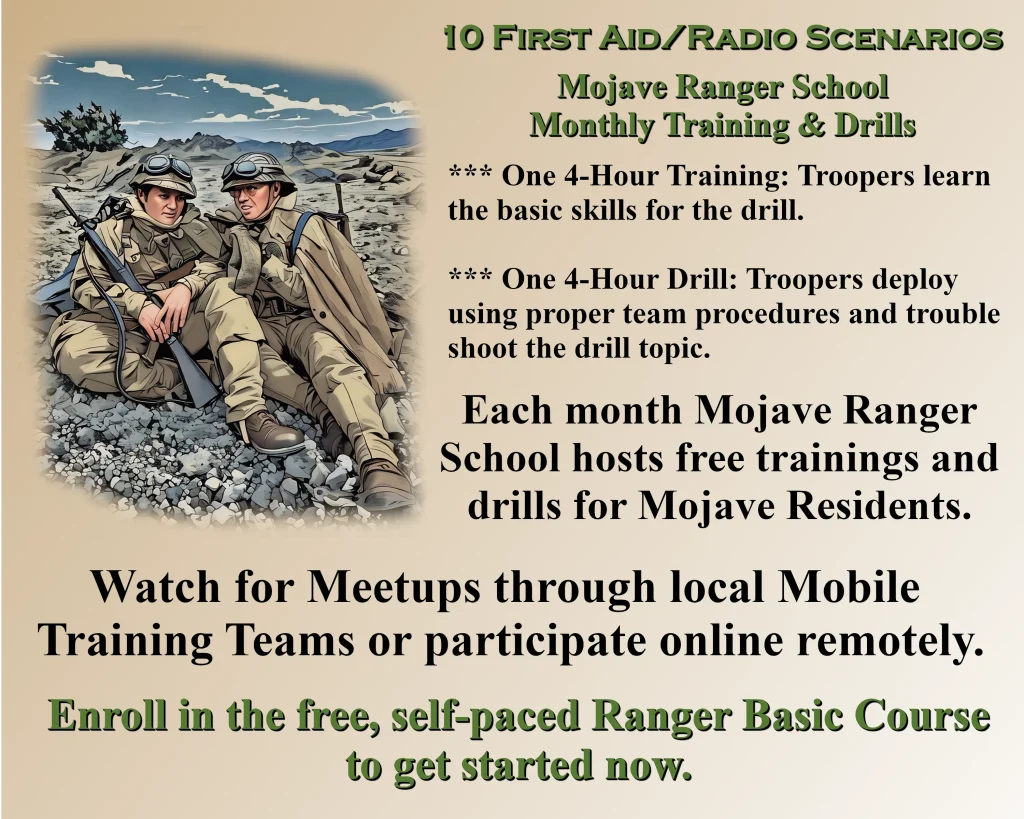
 Team First Aid Training
Monthly trainings are not intended to be the training on the topic. Monthly trainings are when the trainees use the skills they studied to work as a team to overcome a mission objective. For instance, the CPR drill is about how to work as a team in a CPR scenario, not individually learn CPR. How to do CPR is covered in the online training and the Team Medic’s training.
Each monthly training covers blocks from each topic progressively. The first aid, radio and other training for the topics is in the online basic course and should be done by the student before the training day for that topic.
Trainees can sign off on skills at the monthly drills. The Ranger Basic Task Book is a book of skills checklists for each topic. Trainees demonstrate the skill at the drills and the Instructor signs off on that skill in the trainee’s Task Book.
Each course has an accompanying Task Book. The task books allow trainees with previous military or Emergency Services experience to check off the skills they’ve already learned professionally and focus on what they need for the next rank.
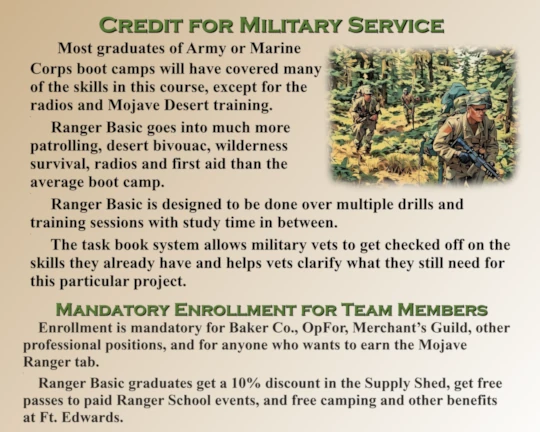 Self-Paced Training
Trainees can join the course at any time of year and don’t have to wait for January to start on the course schedule. Trainings and drills are 4-hours on 2 days each month, but once functional, regular Milsim operations will be happening each weekend at Fort Edwards.
Trainees have the opportunity to train at the fort during on any regularly-scheduled weekend and participate in missions to their level of training and scope of practice.
5 Training Missions
- Mission 1: Forth and Back – Use a GPS to establish a supply cache in the Mojave. Mission 1 introduces teams to basic mission procedures on a short hike to establish a supply cache.
- Mission 2: The Patrol Base – A Support team works out of a patrol base, which is a small rearward base with additional medics and resources where Ranger Support Teams can extract injured patients to.
- Mission 3: Establish Communications – Establish a radio relay station at a remote Patrol base and run security patrols.
- Mission 4: Radio Triangulation – working from a remote Patrol Base, use ham radio equipment to locate and recover a lost shipment in the desert using radio signal triangulation
- Mission 5: Capture the Flag – Valuable equipment needs to be recovered after a Raider attack. Working from a remote patrol base, find the Raiders, recover the gear and then come home.
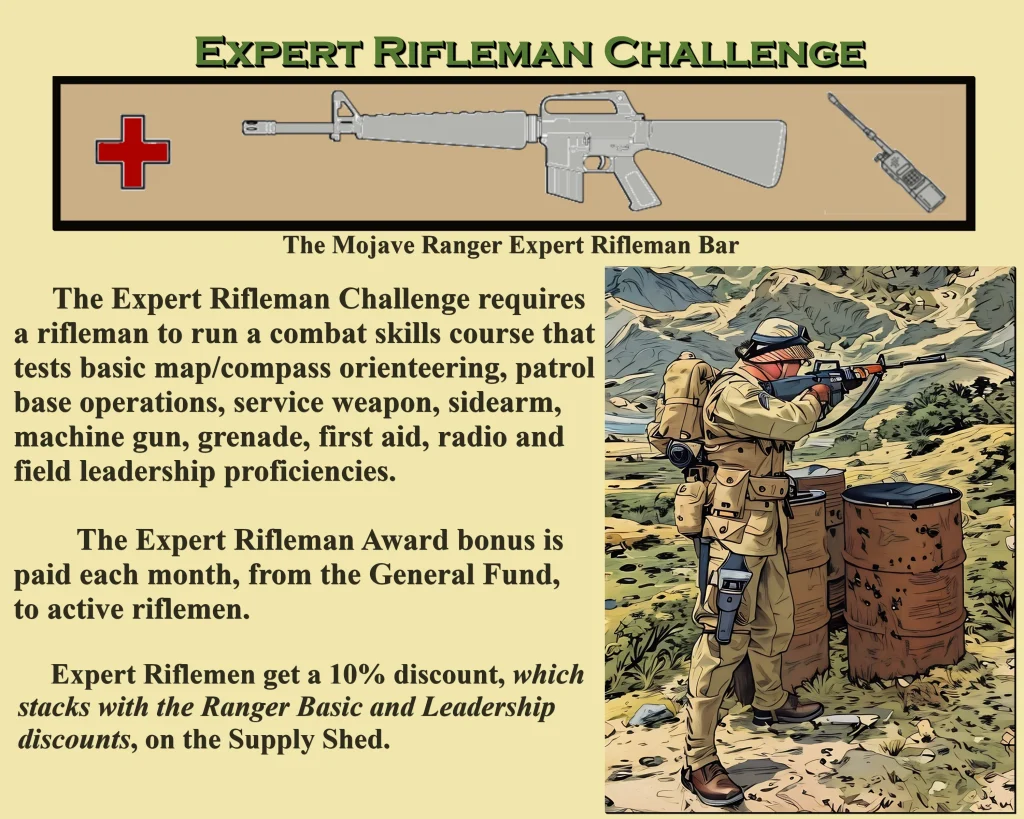 Force-On-Force Training with Plastic BB’s
Mojave Ranger School uses airsoft guns and military simulation to create a fully-immersive weekend-long Live-Action Role Play adventure for players. Airsoft guns shoot a 6mm plastic BB at about 400 feet per second, half the speed of a .45 caliber bullet, and it hurts when you get hit.
Players are required to wear proper safety equipment during trainings, drills and live operations and can get seriously injured if they play in an unsafe manner. Using the Crawl-Walk-Run training methodology, trainees learn to slowly and efficiently operate their equipment and work together as a team during progressively harder and faster exercises.
The December Winter Games and YOUHAD (Yearly Operational Unit Holiday Avoidance Drill) are played at full-speed between fully-trained Mojave Rangers with full Force-On-Force operations. YOUHAD a year to get ready for it.
The playing field (the Mojave Desert) is inherently dangerous and your instructors will be hunting you, with BB guns, for bounties, so take the training seriously. Or don’t, you’re the one getting shot at.