 Why We Do It This Way
The milsim game at Fort Edwards provides the strategic and tactical backdrop for the free training, but also exists independently. The training and operations at Fort Edwards can happen even without the larger milsim game.
All the basic training at Fort Edwards is free for anyone who shows up and follows the rules, and the online courses and downloadable PDF manuals are also free. The Mojave Rangers Game is free to play and the training in the Ranger Basic, Leadership and Team Roles courses is always free.
Rank-based staff are contractors who serve on the milsim teams as part of their small business. Rank-based stipends are paid to contractors to offset the business expenses (transportation, gear, etc) and contractors can also make product commissions.
It’s not realistic to try to pay a minimum wage for employees for a persistent, ongoing milsim campaign without a large retail operation to support it.
It’s very realistic to develop a cadre of self-employed contractors as instructors and milsim players on a corporate-sponsored milsim team.
Starting Your Small Business
The Club Manager Basic Course is the basic contractor training for 3rd SOB. The goal of the Club Manager Basic Course is to provide basic business training and support for milsim instructors who establish Mojave Ranger Games in their local areas.
All 3rd SOB staff are 1099 self-employed contractors. 3rd SOB is a cooperative for-profit club that pays rank-based stipends and course graduate bonuses for regular milsim players at Fort Edwards. 3rd SOB vendors and sales reps make commissions + bonuses and stipends for products sold and events managed. No one at 3rd SOB gets paid by the hour.
 The 3rd SOB Micro-Franchise
The 3rd Special Operations Brigade is a self-funding social club, with the goal of developing cash flow to be used for rank-based stipends and bonuses for the Ranger School staff who maintain the safety and immersion of the programs. The 3rd Special Operations Brigade uses publishing and an aggressive vendor staff to generate operating expenses, bonuses and stipends.
Ranger Training Clubs
The 3rd Special Operations Brigade 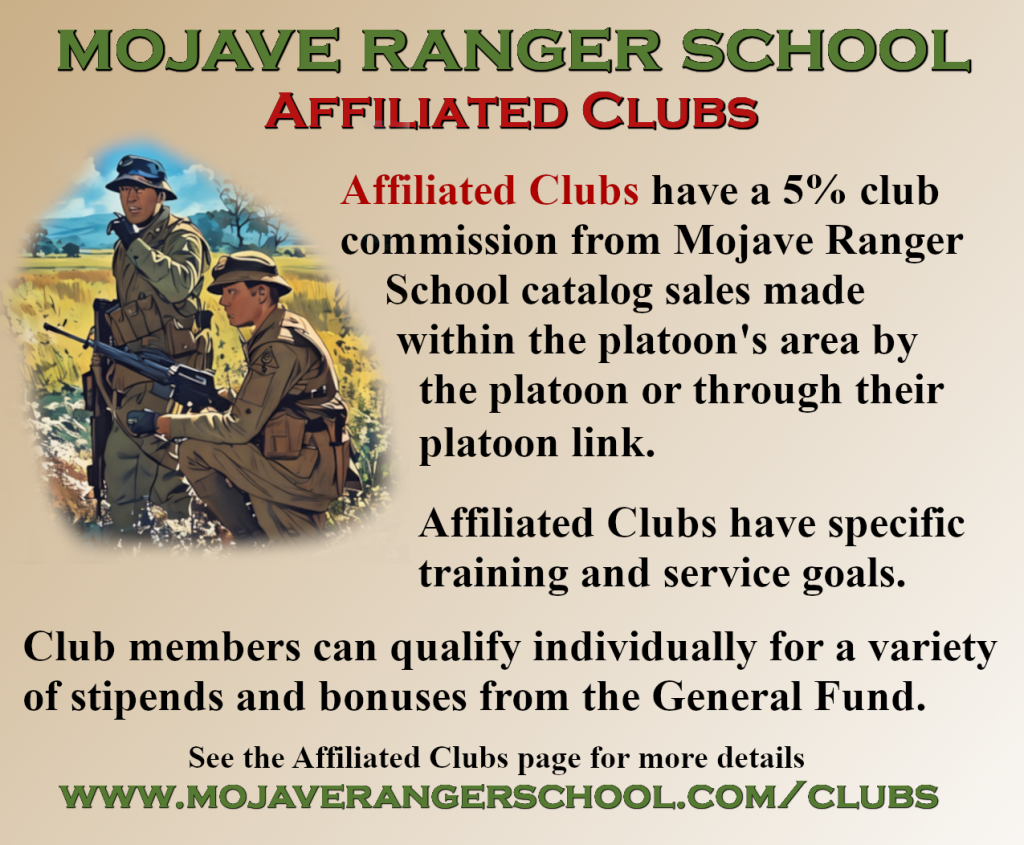 sponsors Ranger Training Clubs aka affiliated clubs, which use Mojave Ranger School training and marketing materials to help local LARPers learn real-world skills. Ranger Training Clubs have to meet specific training and service goals. Ranger Training Clubs make a 5% club commission on any sales through the club’s links and events, to help cover insurance and other club expenses.
Club members can qualify individually for rank-based stipends and other bonuses from the General Fund. The General Fund is the destination for money from Amazon.com and other un-trackable sources, plus a large percentage of every sale made through the 3rd Special Operations Brigade system.
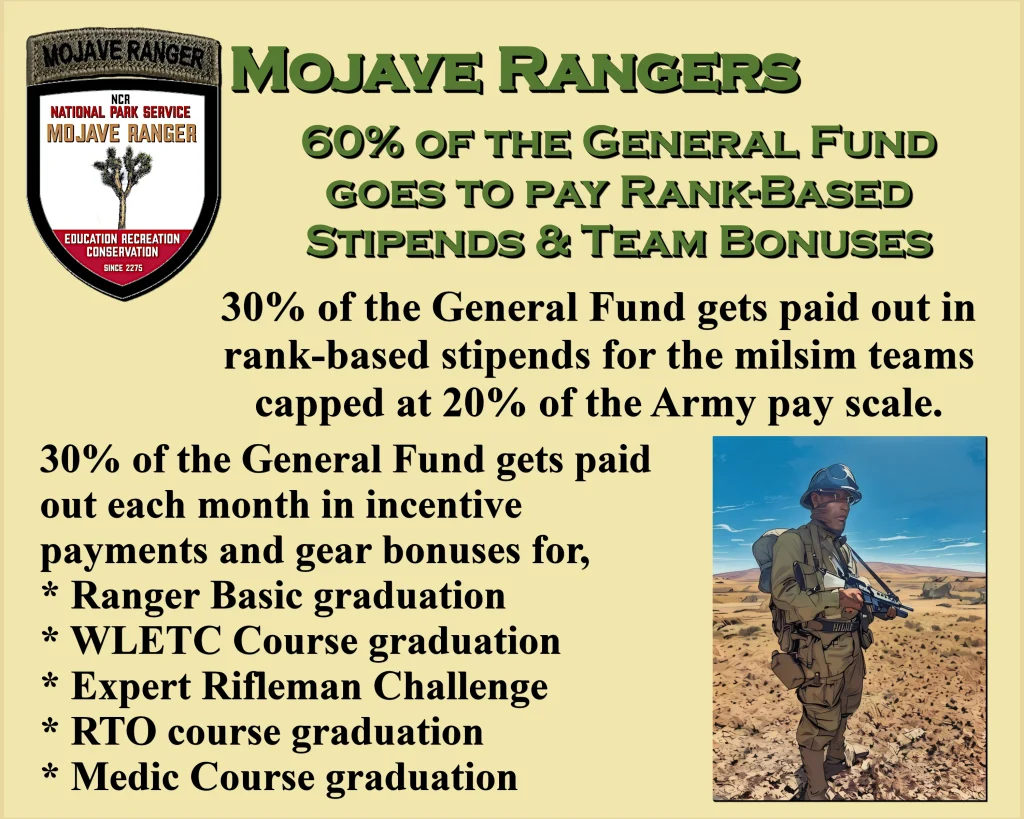 The purpose of the General Fund is to provide an account that pays rank-based stipends and Ranger School and Leadership Course Graduate bonuses for our professional trainers, managers and merchants, who create and maintain the immersive environment for students and guests.
The General Fund also pays stepped bonuses for team medics and radio operators who get real-world training and certifications.
Managing Your Taxes
The Club Manager Basic Course shows milsim contractors exactly how to establish your own local training business as a Flight Training or Ranger Training Club. 3rd SOB milsim contractors learn to manage their training business using 3rd SOB products and marketing and learn to turn your milsim/flight sim hobby into an actual business.
Everything to do with your milsim business is tax-deductible, including your travel, meals on the road and milsim event fees, and can be tracked as simply as using a Schedule C (for Sole Proprietors) on your regular 1040 tax form. The Club Manager Basic Course will show you how to manage the financials as well as the marketing.
- Self-Employment Tax: This tax covers Social Security and Medicare. For 2026, the rate is 15.3% on 92.35% of your net earnings.
- Social Security: 12.4% on the first $184,500 of earnings.
- Medicare: 2.9% on all earnings with no cap.
- Income Tax: You also owe federal and state income tax at your specific tax bracket rate on your net profit.
- Filing Requirement: You must file Schedule SE and pay self-employment tax if your net earnings reach $400 or more.
| 2026 Payment Period | Due Date |
|---|---|
| Q1 (Jan 1 – March 31) | April 15, 2026 |
| Q2 (April 1 – May 31) | June 15, 2026 |
| Q3 (June 1 – Aug 31) | Sept 15, 2026 |
| Q4 (Sept 1 – Dec 31) | Jan 15, 2027 |
- Home Office: A portion of rent/mortgage, utilities, and insurance if used exclusively for business.
- Vehicle Expenses: Either the standard mileage rate (70 cents per mile in 2026) or actual expenses like gas and repairs.
- Health Insurance: 100% of premiums for yourself, spouse, and dependents (if not eligible for an employer-sponsored plan).
- Half of SE Tax: You can deduct 50% of your self-employment tax when calculating your adjusted gross income.
- Qualified Business Income (QBI): Many contractors can deduct up to 20% of their qualified business income.
- Retirement: Contributions to a Solo 401(k), SEP-IRA, or SIMPLE IRA are typically deductible.
- W-9: Complete this for clients so they have your taxpayer ID to issue 1099s.
- 1099-NEC: You will receive this from clients who paid you $600 or more (note: this threshold is scheduled to increase to $2,000 starting in tax year 2026).
- Schedule C: Use this to report your business income and deduct your expenses.