

Welcome to the New California Republic’s 1st National Park!
 On August 25th, 2275 the NCR Congress approved the Mojave National Park and the creation of the NCR National Park Service. The National Park Service (NPS) preserves the natural and cultural resources of the NCR. Its core mission is to conserve park scenery, wildlife, and historic objects, ensuring these spaces remain unimpaired for the education, inspiration, and enjoyment of current and future generations.
The fundamental purpose of the agency is to:
- Conserve the scenery, natural and historic objects, and wildlife.
- Provide for the enjoyment of these resources by the public.
- Leave the parks unimpaired for the enjoyment of future generations.
To fulfill its legislative mandate, the NPS handles a broad array of specific responsibilities:
- Resource Stewardship: Managing land, water, and wildlife to maintain ecological integrity and protect endangered species.
- Historical Preservation: Safeguarding historical sites, battlefields, and artifacts.
- Visitor Services: Providing visitor centers, educational programs, guided tours, and safety operations.
- Community Assistance: Administering federal preservation, safety and recycling programs that help local governments and organizations protect their own cultural heritage.
Developing a Park in the Mojave Desert
 The Mojave Desert, together with the Sonoran, Chihuahuan, and Great Basin deserts, form a larger North American desert. Of these, the Mojave is the smallest and driest. It displays typical basin and range topography, generally having a pattern of a series of parallel mountain ranges and valleys.
It is also the site of Death Valley, which is the lowest elevation in North America. The Mojave Desert is often colloquially called the “high desert”, as most of it lies between 2,000 and 4,000 feet (610 and 1,220 m). It supports a diversity of flora and fauna.
The 54,000-square-mile (140,000 km2) desert supports a number of human activities, including recreation, ranching, and military training. The Mojave Desert also contains various silver, tungsten, iron and gold deposits.
 The spelling Mojave originates from the Spanish language, while the spelling Mohave comes from modern English. Both are used today, although the Mojave Tribal Nation officially uses the spelling Mojave, which is a shortened form of Hamakhaave, an endonym in their native language, meaning “beside the water”.
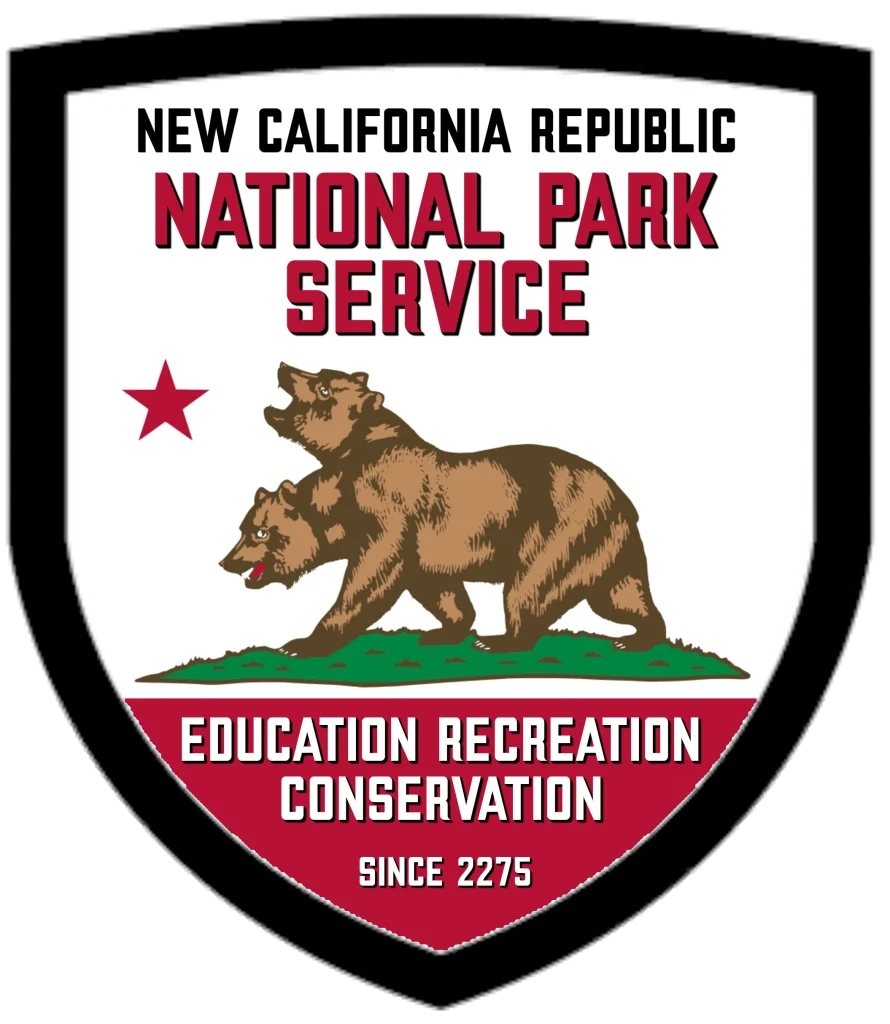
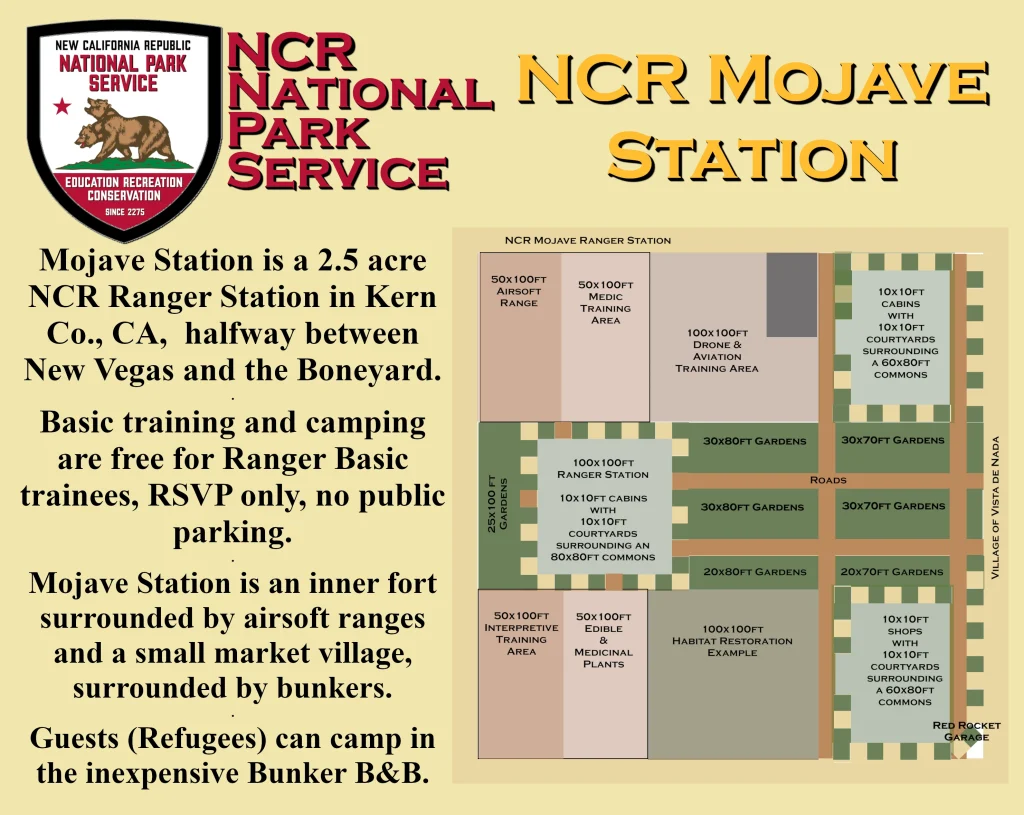
The NCR is developing a series of Ranger Stations in the Mojave, with the first station being near the town of Mojave. Mojave Station is a 2.5-acre training facility and market village that serves as the central point for the Mojave National Park operations, with patrol bases at New Vegas, the Boneyard and Fort Fresno.
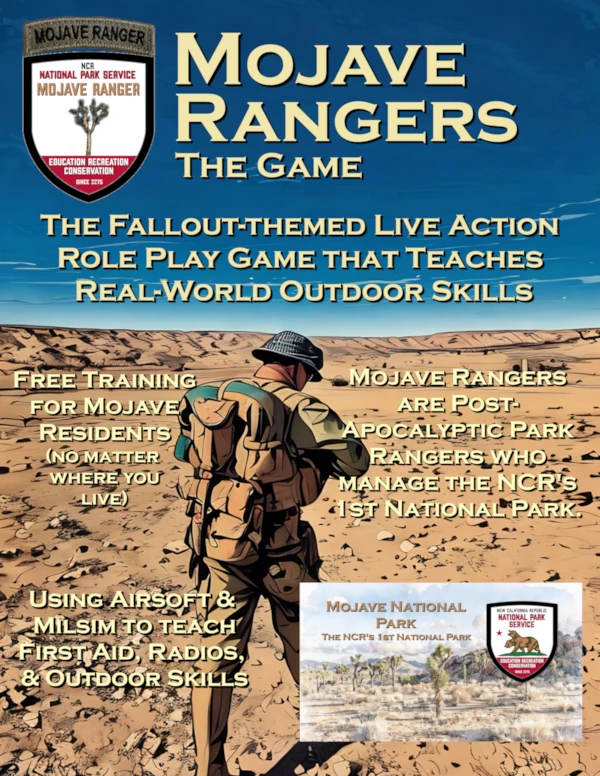
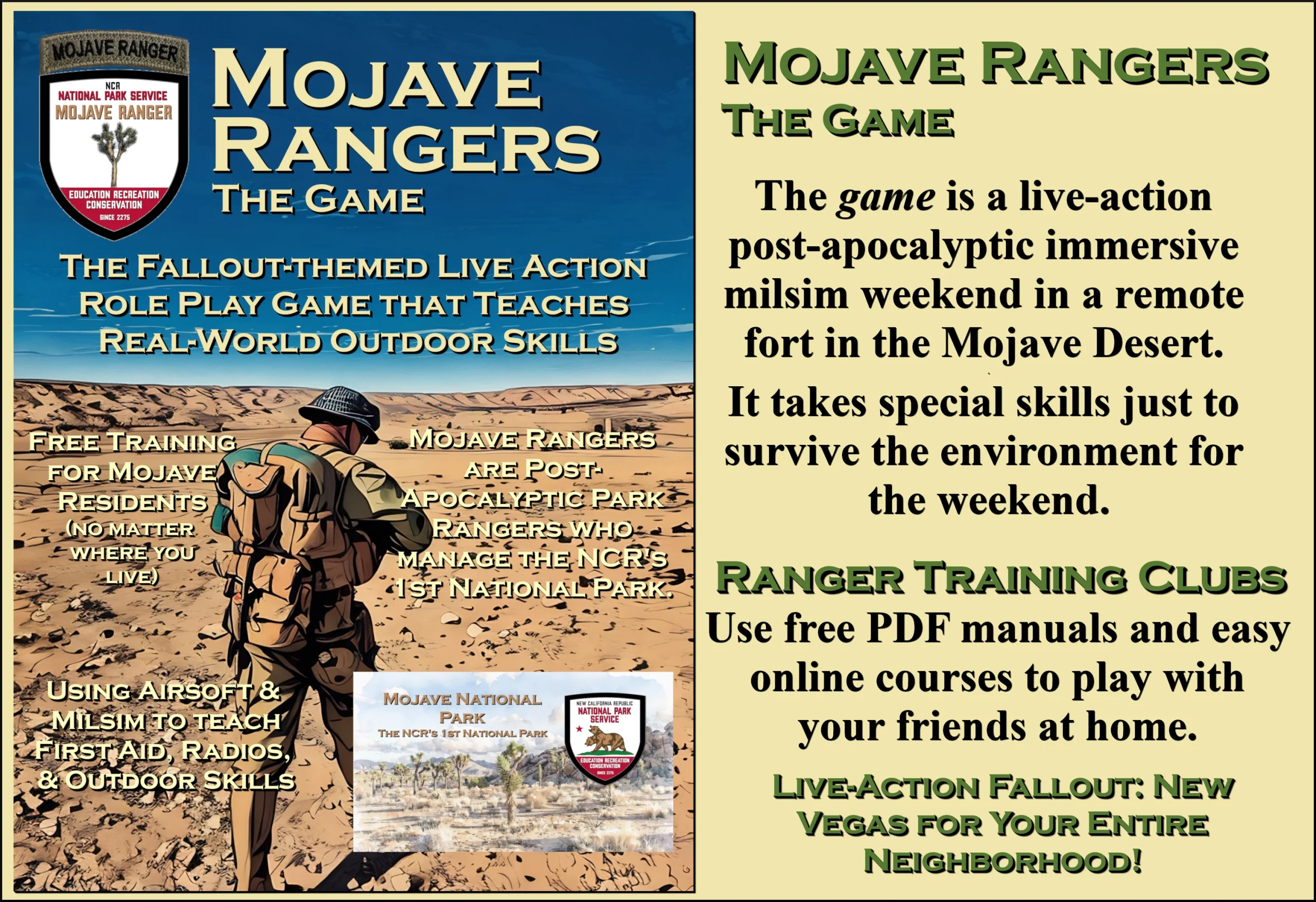
The Mojave Rangers provide free training for Mojave residents and NCR troopers while maintaining security patrols, medical clinic routes and tech recycling stations.
Resource Stewardship, Visitor Services, Community Assistance
Mojave Rangers run security, medical and recycling programs throughout the Mojave from a central base at Mojave Station. Mojave Station is also the base for a variety of wildlife protection and habitat conservation programs.
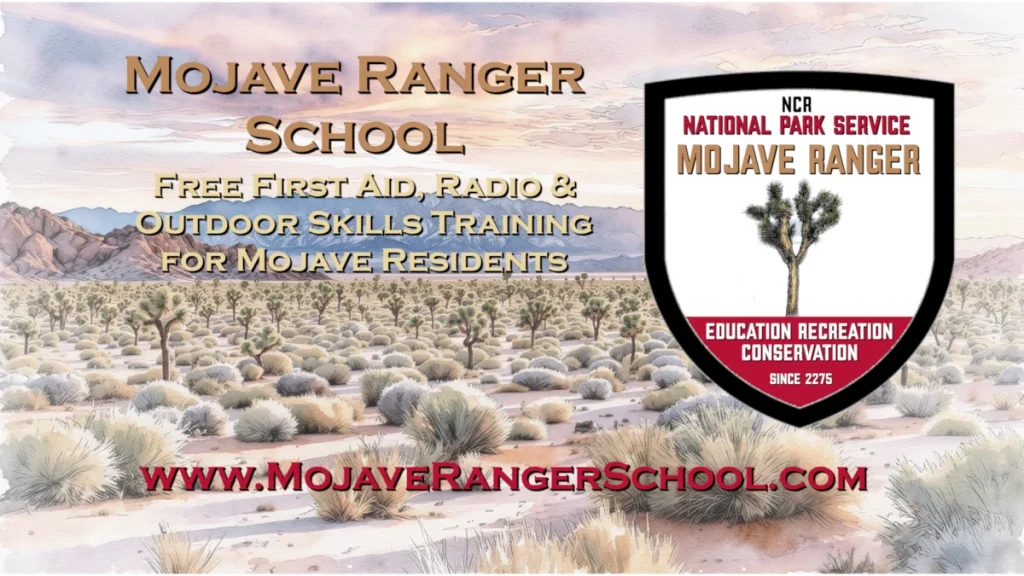
The Mojave Ranger School at Mojave Station runs free first aid, radio and field skills training.


Leave a Reply